I've Written Fosamax Prescriptions For 24 Years. When My Own DEXA Came Back –2.4, I Refused To Fill Mine. A Patient's Shopping Bag Showed Me What I'd Missed.
A physician whose mother died after breaking her hip at 59 explains why calcium never moved her number, the one dose detail almost every bottle gets wrong, and what her six-month scan showed.

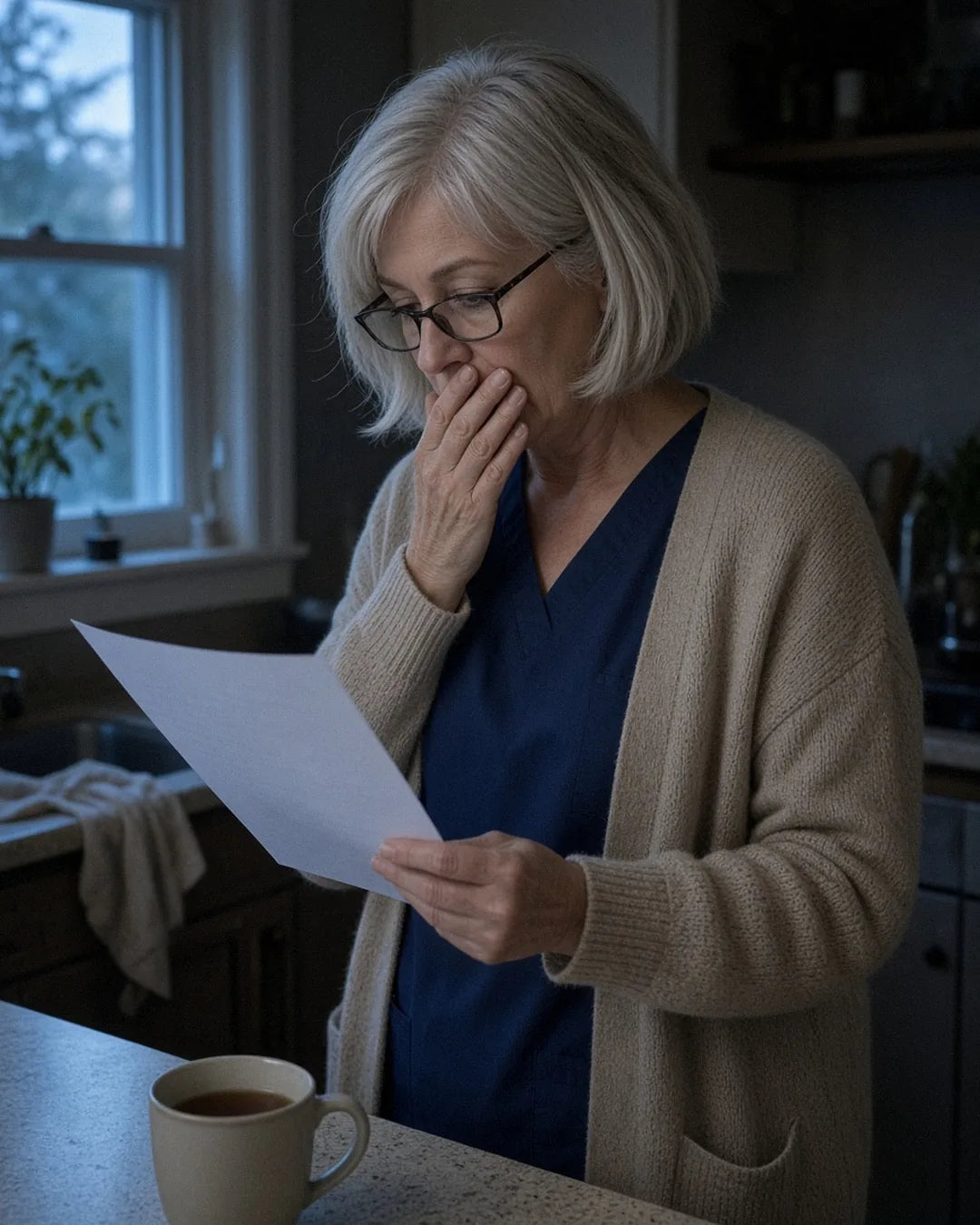
The scan was on the kitchen table when the sun came up.
I'd printed it at the office the night before and told myself I wouldn't look at it again until morning. I lasted until 5:40.
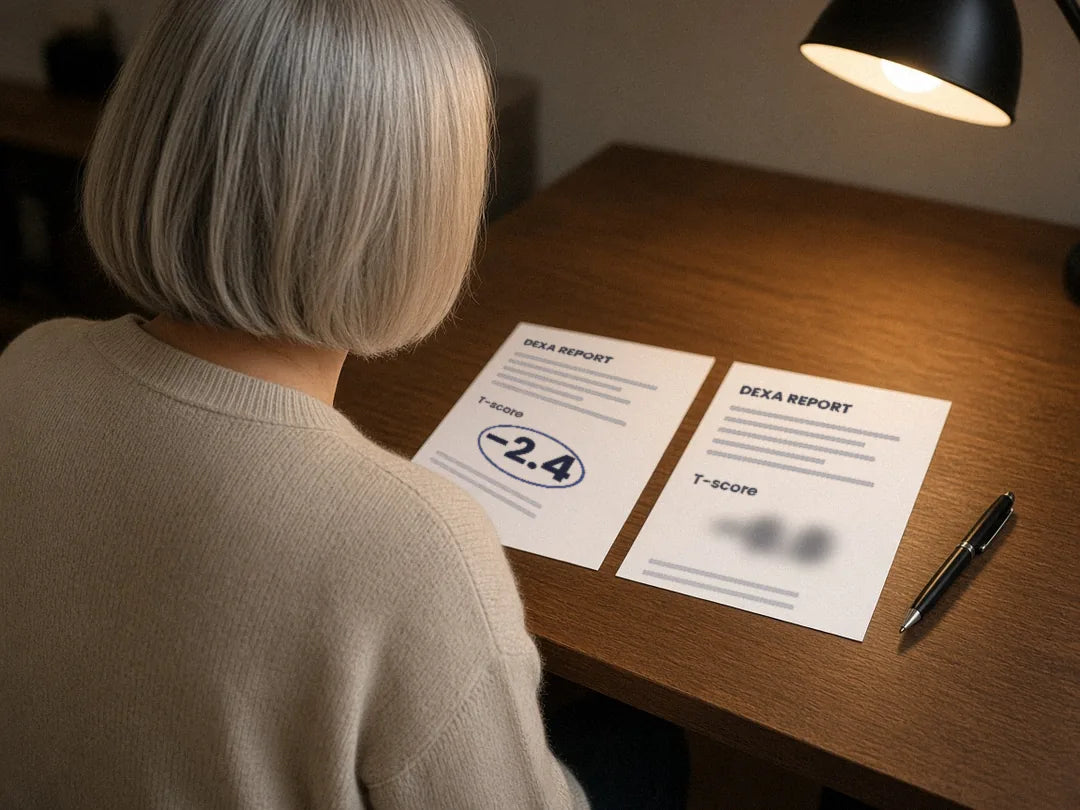
Femoral neck T-score: –2.4.
I've read that number off a screen thousands of times. I've said it out loud to women in paper gowns. I know what it means, what it becomes, and what I'm supposed to say next.
I had never read it with my own name above it.
My name is Linda Cooper. I'm 55. I've practiced internal medicine for 24 years, and low bone density is the single most common thing that walks through my door.
I'm going to tell you exactly what happened over the next year, including the part where a 58-year-old patient fixed something I couldn't.
But first you need to know about my mother. Because she's why I opened that envelope with my hands shaking.
The Phone Call I Got When I Was 26
My mother never had a DEXA scan.
She had back pain she called "just getting older." She'd lost almost an inch of height and laughed about the hems of her pants. She took a calcium chew on the days she remembered.
At 59, she stepped off the back porch to bring in the laundry. Two steps. She'd taken those two steps ten thousand times.
Her hip broke before she hit the ground.
That's what the orthopedic surgeon told us afterwards, quietly, in the corridor. The bone gave way first. The fall came second.
She never came home.
I gave the eulogy at 26, in my second year of residency. Two years later her younger sister fractured her spine reaching into a kitchen cupboard. She was 62.
I chose my specialty at those funerals. I needed to believe there was something a doctor could do about what was coming for the women in my family.
For 24 years, I believed the something was a prescription.
What I Told Women For Two Decades
Here's the conversation I've had more times than I can count.
A woman in her mid-fifties sits down across from me. Newly postmenopausal. She's done her homework. She lifts weights now. She's moved to Greek yogurt and salmon. She walks every single day. She's cut the wine back to Fridays. She takes calcium and vitamin D like it's a religion.
And her T-score is sitting at –1.8. Or –2.1. Or –2.3.
She looks at me like she's failed a test she studied for.
I'd explain it the way I was taught. Estrogen drops. Bone breaks down faster than it's rebuilt. Genetics. Stress. Age.
Then I'd say the line every woman over 50 has heard: "Keep up the calcium, and we'll rescan in two years."
And if the numbers kept sliding, I wrote the prescription. Fosamax. Prolia. Forteo.
I wrote them thousands of times.
I also watched what came back through my door afterwards.
Women who had to sit bolt upright for half an hour every week after their pill, because of what it can do to the throat on the way down. The burning stomach. The heartburn that never quite left. The thumping headaches. The dentists who wanted to know about a woman's bone medication before they'd touch a tooth.
And the hardest thing to watch: women on two drugs whose numbers were still going the wrong way.
I kept writing those prescriptions anyway.
Not because I loved them. Because I didn't have anything else to hand them.
Then I Was The One In The Paper Gown

For years, my own numbers had been "borderline." High-normal. I told myself I was managing it, the way doctors always think we're managing it.
Then a scan came back at –1.8.
Six months later: –2.4.
That's the morning at the kitchen table. That's the number on the printout.
I expected to feel clinical about it. I felt fear. The exact look I'd seen on hundreds of faces across my desk, I could now feel on my own.
My physician (I'm not allowed to be my own doctor, and thank God for that) took one look and reached for her pad.
"Fosamax. 70 milligrams, once a week. Let's start now."
I was in the patient's chair. I heard my own sentence come out of someone else's mouth, word for word.
"I'll think about it," I said.
I wasn't going to think about it.
Why A Doctor Who Prescribes It Every Week Wouldn't Take It
I want to be careful here, because this isn't an anti-medicine story. Bone drugs have a place, and some women absolutely need them. That's a conversation for you and your own doctor.
But I knew the mechanism cold. Most of those drugs work by putting the brakes on the cells that break bone down. They slow the loss.
They don't send in anyone to rebuild.
And I'd watched what that looks like over twenty years. The pill every Monday. The side effects that slowly become "normal." The T-score that gets "managed" but never really comes back.
I'd sat with women for whom that road went nowhere. I wasn't putting myself on it before I'd tried everything else.
So I did what I tell every patient to do first.
I'd do it properly. I'd do it like a doctor.
The Women In My Waiting Room Who Never Say It Out Loud
There's a look I learned to recognize in my first year of practice.
It's the woman who comes in for "a routine check" and spends the first five minutes talking about anything else. Her blood pressure. Her daughter's wedding. A cough that isn't really a cough.
Then, right at the end, hand already on her bag: "Oh, and my DEXA came back. The letter said osteopenia. Is that bad?"
She's been carrying that letter for three weeks.
She hasn't told her husband, because he'll fuss. She hasn't told her sister, because her sister will say "Mom had that." She's quietly stopped carrying the heavy grocery bags. She grips the banister now. She's stopped getting down on the floor with the grandchildren, because she isn't sure how she'd get back up, or what might crack on the way down.
She hasn't said any of that to me. She doesn't need to. I can see it in the way she lowers herself into the chair.
And what does the system give her? A leaflet. A calcium recommendation. A date two years away.
I used to think that was enough. Now I'd been handed the same leaflet myself, and I understood something I'd never understood from the doctor's side of the desk.
The scan isn't the hardest part. The waiting is.
Two years of wondering whether every stumble is the stumble. Two years of watching your own mother's story start to play out in your own body, and being told to keep doing the thing that's already not working.
I wasn't going to wait two years. But I also had no idea what else to do.
Eight Months Of Doing Exactly What I Prescribe
Heavy weights, four mornings a week, before clinic. I hired a trainer so I couldn't cheat.
Protein at every meal.
1,200mg of calcium a day.
The extra glass of wine at dinner got poured down the sink.
I bought the top-rated calcium and vitamin D stack on Amazon and took it every single morning for six months. When nothing moved, I tried a second brand.
I was disciplined. I'm a physician. Discipline is the whole job.
The next scan moved 0.2 points.
Still –2.4 territory.
I remember holding the report and thinking a thought I'd never let a patient hear me say:
Maybe my body's just too far gone for any of this to work.
I was wrong. But not in the way I expected.
The answer didn't come from a journal or a conference. It came out of a patient's handbag.
The Bottle She Was Embarrassed To Show Me
She was one of my regulars. 58, a few years past menopause, osteopenia for as long as I'd known her. Calcium, vitamin D, and a weekly Fosamax for over a year. Her T-score had flatlined.
I opened her new scan expecting the same flat line.
It had moved. Clearly moved, in the right direction, for the first time since I'd known her.
I turned the screen towards her. "Did you change anything? New medication?"
"No."
"Anything at all?"
She went a bit pink. Then she reached into her bag and set a small bottle on my desk, the way a teenager hands over a bad report card.
Resveratrol capsules.
"I didn't want to bother you with it, Doctor. I know you think supplements are a waste of money."
She was right. I did. Mostly.
Then she said the sentence that kept me up that night:
"The regular ones don't work. You have to get the dose they used in the study. My sister found it. There's a difference."
I thanked her, wrote it in her chart, and moved on to my next patient.
But I didn't stop thinking about it. Here's what I didn't tell her.
I'd tried resveratrol. Months earlier, on a colleague's offhand suggestion. One bottle. Nothing happened, so I filed it with all the other things that don't work.
What if I hadn't been taking the thing that works at all?
11:40 P.M., My Own Kitchen, Reading Like A Resident Again
My scan was still on the counter where I'd left it that morning.
I made tea, opened my laptop, and pulled up the clinical literature the way I hadn't since residency. No blogs, no supplement websites, no Facebook groups. Only studies in real women, checked by other scientists before publication.
I want to be clear about one thing, because it matters to me as a doctor. There are hundreds of rodent studies on bone. I skipped every one of them. A mouse isn't a 58-year-old woman. I only read human clinical trials.
Around half past one, I found the one my patient's sister must have found.
It was a randomized, double-blind, placebo-controlled trial. Postmenopausal women. It ran for 24 months. It's known as RESHAW.
The women took resveratrol every day: 75mg twice a day. 150mg in total.
After 12 months, compared with placebo, their bone density had improved at the lumbar spine and at the femoral neck, which is the top of the thigh bone, the exact place my mother's broke. Their femoral neck T-score improved. And a blood marker of bone breakdown, called CTX, fell by 7.24%.
That marker matters. It's a measure of how fast your body is tearing bone down. In the women who took resveratrol, the tearing-down slowed.
I read that paragraph three times.
Then I went to my bathroom cabinet, found my old bottle, and turned it to the label.
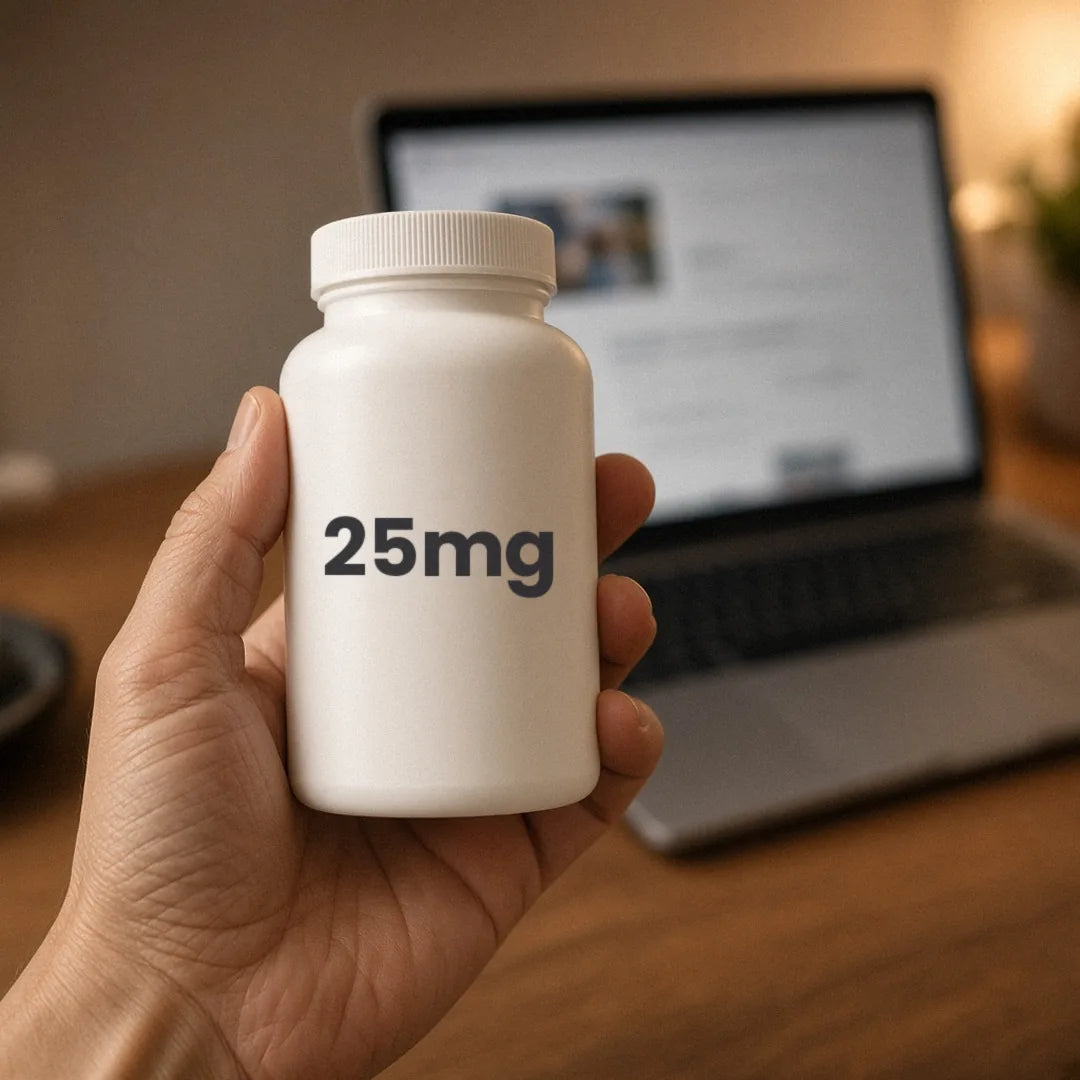
25mg per serving.
The second brand I'd looked at was about 50mg.
The study that moved women's bones used 150mg a day. I'd been taking a sixth of it and calling resveratrol a failure.
That's like taking one-sixth of an antibiotic course and deciding antibiotics don't work.
Why Your Bones Never Stop Being Rebuilt, And What Goes Wrong After 50
Before I tell you what I did next, you need to see what I saw at 2 a.m. Most women have never had this explained to them in plain English, and once you understand it, the last ten years of your scans will finally make sense.
Your skeleton isn't a fixed object, like a statue.
It's more like an old house that's being renovated constantly, one tiny room at a time, for your whole life.
Every day, two teams take turns.
The clear-out team goes in first. Their job is to remove small patches of old, tired bone before they crack. Doctors call them osteoclasts.
The rebuilding team follows behind. They lay down fresh new bone in the cleared space. Doctors call them osteoblasts.
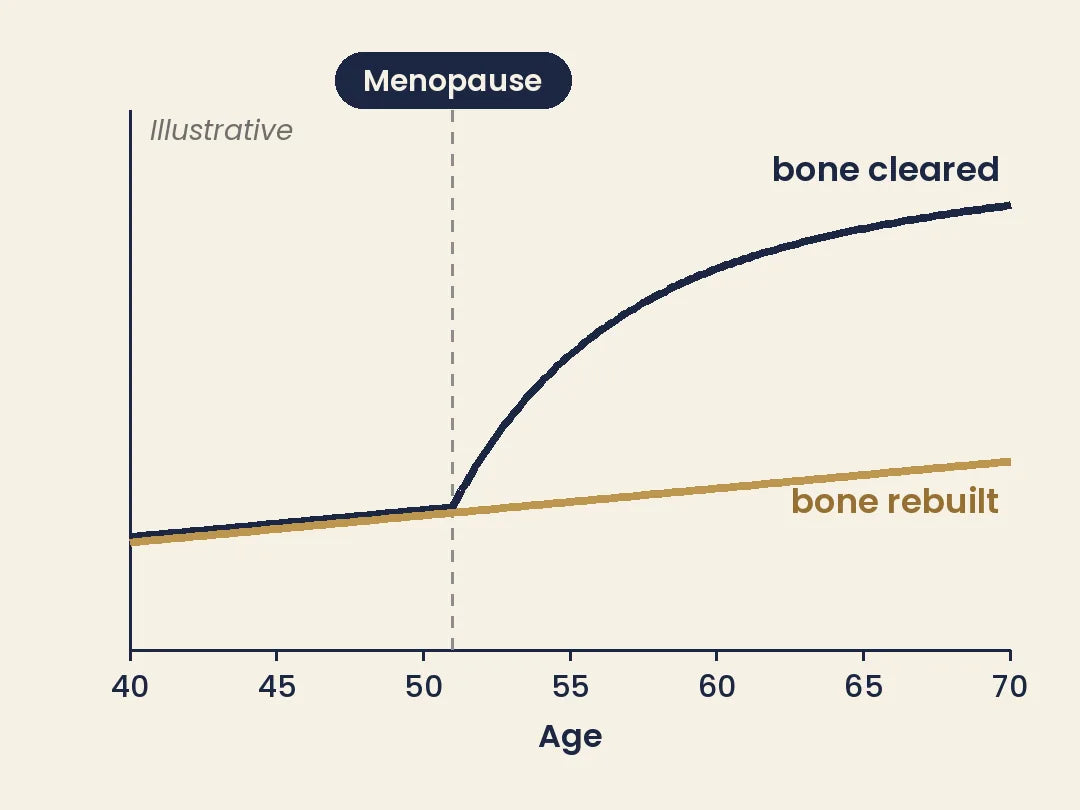
When you're 30, the two teams are perfectly in step. A patch comes out, a patch goes back in, and nothing is lost.

Then menopause arrives.
Estrogen is the foreman who keeps the clear-out team in line. When estrogen falls, that team speeds up. They start removing bone faster than the rebuilders can replace it.
Every month the gap gets a little wider. You can't feel it. There's no pain. No warning.
Just a number on a printout that slides a little more every time.
That much I'd known since medical school. It's the version every doctor tells.
It's also why everything you've been told to do is aimed at the wrong team.
Calcium Is The Bricks. Nobody Checked On The Builders.
Think about what you've been told to take.
Calcium is building material. Vitamin D helps you absorb it. K2 helps direct it to bone. They're all good. I still take them, and you should keep taking yours.
But all three of them are supplies.
Not one of them tells the clear-out team to slow down.
And not one of them helps the rebuilders keep up.
So for years, women like me and maybe you have been carefully delivering pallets of bricks to a building site where the demolition is running at double speed and the builders are falling behind.
More bricks don't fix that. More bricks just mean a bigger pile on the sidewalk.
That's why my 1,200mg of calcium moved my number 0.2 points.
That's why your doctor says "keep taking calcium" while your number keeps sliding.
It isn't that you did it wrong. It's that nobody ever told you the job had two halves, and calcium only covers the supplies.

When I understood that, sitting at my counter after 2 a.m., I didn't feel stupid.
I felt angry. For my mother, who took her calcium chews and never stood a chance. And for every woman I'd sent home with "keep up the calcium."
The Question That Should Have Been Obvious
Here's what still embarrasses me.
For 24 years, every bone conversation in my office was about loss. How fast is she losing? How do we slow the losing? Which drug brakes the losing best?
Not once, in all those years, did I ask the other question:
Why have her rebuilders stopped keeping up?
Because that's the half nobody treats. The drugs brake the clear-out team. Calcium piles up supplies. And the rebuilding team, the only team that actually adds bone back, gets ignored. We all assume it simply gets old and gives up.
It doesn't. The RESHAW women were postmenopausal. Their rebuilders weren't young. And their bone density still went up at the spine and the hip.
Which means the rebuilders were still there. Still capable. They'd just been outnumbered and under-supported for years.
That changed how I saw my own scan. –2.4 wasn't a verdict. It was a measure of a gap. And gaps can be closed from both sides.
What Resveratrol Actually Does (In Plain Words)
Resveratrol is a natural compound some plants make to protect themselves. The richest source is the root of a plant called Japanese knotweed.
In the human research, resveratrol does the two things calcium can't:
It calms the clear-out team. That's what the fall in CTX, the bone-breakdown marker, shows in RESHAW. Less bone was being torn down.
It supports the rebuilding team. That's how bone density at the spine and hip could actually improve in the trial, not just hold steady.
Slow the clear-out, help the rebuild. That's both halves of the job.
It isn't a hormone. It isn't a drug. It's a plant compound, at the dose the trial used.
That dose is where almost everyone goes wrong.
The Dose Trap On Almost Every Shelf
The next morning, before clinic, I did something slightly unhinged.
I went to two pharmacies and a health food store and read the back of every resveratrol bottle on the shelf.
Most were in the 25 to 50mg range per serving.
Some didn't say how pure the extract was. A few hid it in a "proprietary blend", which is label language for "we'd rather you didn't know how much is in here."
The trial used 150mg a day of high-purity resveratrol.
So most women who've "tried resveratrol" have done exactly what I did. They took a fraction of the dose, saw nothing, and gave up on something that might have worked.
There was a second problem, and it's the one that made me angriest.
Why Most Of What You Pay For May Never Reach You
Resveratrol is fragile.
The most common way to make supplement powders is spray-drying, which means blasting the extract with hot air. That's cheap and fast. It's also hard on delicate plant compounds.
So a label can say one number while the capsule delivers less.
Which means there are two ways to fail with resveratrol:
- Too little dose. 25mg when the trial used 150mg.
- Too little survives. Heat processing before it ever reaches the bottle.
I'd managed both.
I wrote three things on the back of my scan printout. If I was going to take anything, it had to clear all three:
- 150mg of resveratrol per daily serving, the RESHAW dose.
- Cold-extracted, with no spray-drying.
- Verified by an independent lab, with the result published, not just promised.
Then I thought: if I'm doing this, I'm doing it properly. What else does the human research say?
The Two Supporting Ingredients I Wanted Alongside It
I didn't want a kitchen-sink formula with twenty ingredients at sprinkle doses. I wanted a short list where every ingredient had human research behind it.
Quercetin, to quiet the fire.
As we age, low-grade inflammation rises in the body. Inflammation is like a smoke alarm going off in the building, and the clear-out team works faster when the alarm is sounding.
Quercetin is a plant compound found in onions, apples and the flower buds of the Sophora japonica tree.
In a double-blind, placebo-controlled trial, 33 postmenopausal women took 500mg of quercetin or a placebo daily for 90 days. The quercetin group's bone-formation markers went up (osteocalcin and P1NP, two signals that the rebuilders are working), and their inflammation markers went down.
NAD+, for the builders' energy.
Every cell in your body runs on a molecule called NAD+. It's part of how cells turn food into usable energy, and building bone is hard, energy-hungry work.
NAD+ levels tend to fall as we age.
The human evidence here is earlier-stage, and I'll be honest about that. A large observational study of 1,883 US postmenopausal women aged 50 and over found that women who got more niacin, the vitamin B3 the body uses to make NAD+, had 13% lower odds of osteoporosis for every extra 10mg a day. That's an association, not proof. But it pointed in the same direction as everything else.
Three ingredients. Three jobs:
- Resveratrol (150mg): slows the clear-out and supports the rebuild.
- Quercetin (250mg): calms the inflammation that speeds up the clear-out.
- NAD+ (500mg): supports the cellular energy the rebuilders run on.
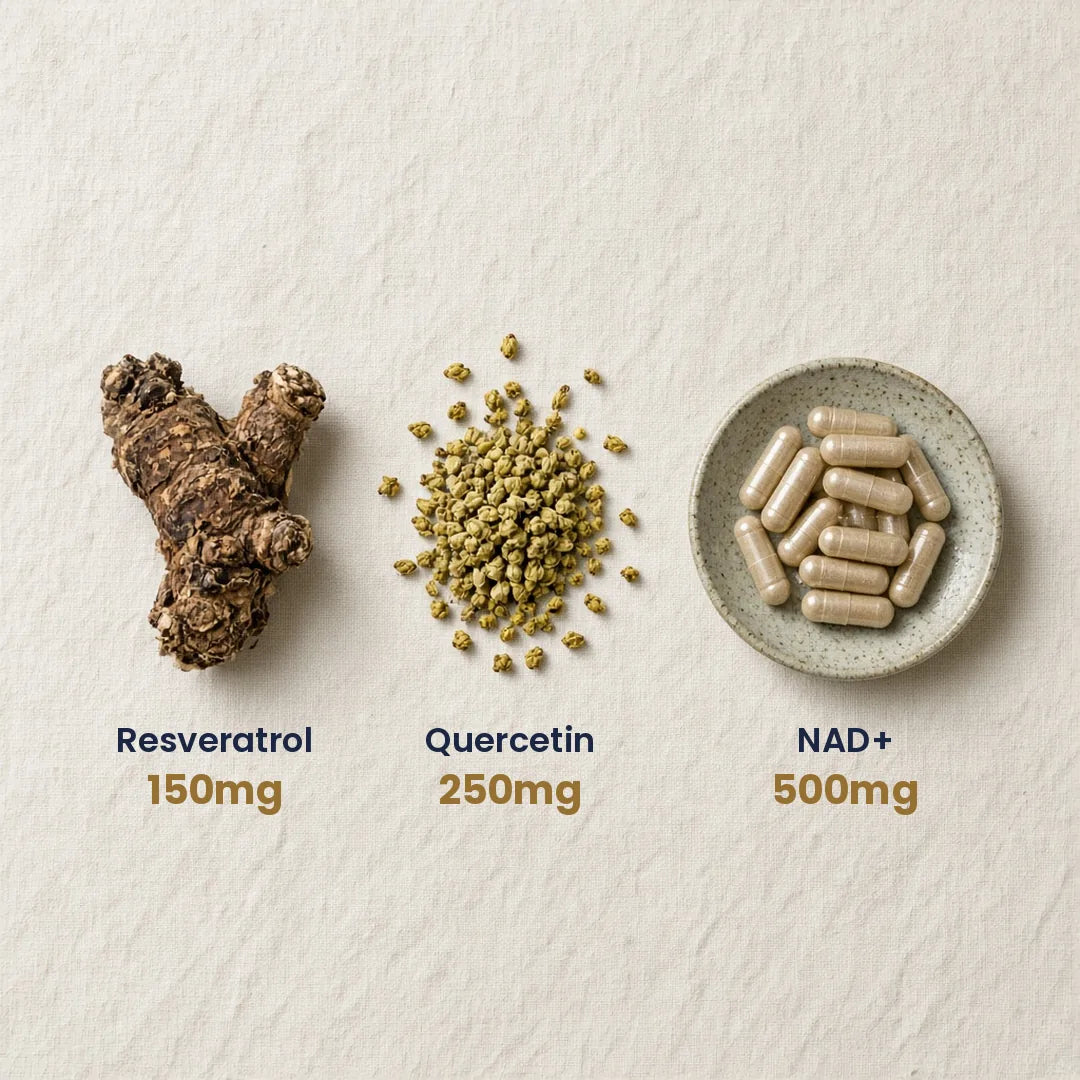
Now I just had to find it in one bottle.
Nine Bottles Wrong. One Bottle Right.
The next weekend I sat down with a spreadsheet, which is what doctors do when we're scared.
Brand after brand failed on the first column. 25mg. 50mg. "Proprietary blend." 100mg, but nothing on purity. Gorgeous websites with no lab results anywhere.
Then the same name kept showing up. In a forum. In a patient's message. On the printout my patient's sister had given her.
Revosil Bone.
I opened their page braced for the usual nonsense.
Instead, the supplement facts panel said exactly what I'd written on the back of my scan:
- 150mg of resveratrol per serving (Japanese knotweed extract, 98%), the dose used in RESHAW.
- Cold-extracted, no spray-drying.
- 500mg NAD+ and 250mg quercetin alongside it.
- Third-party lab verified, no fillers, no proprietary blends.
- Two capsules a day, one at breakfast and one at dinner.
- Made in the USA.
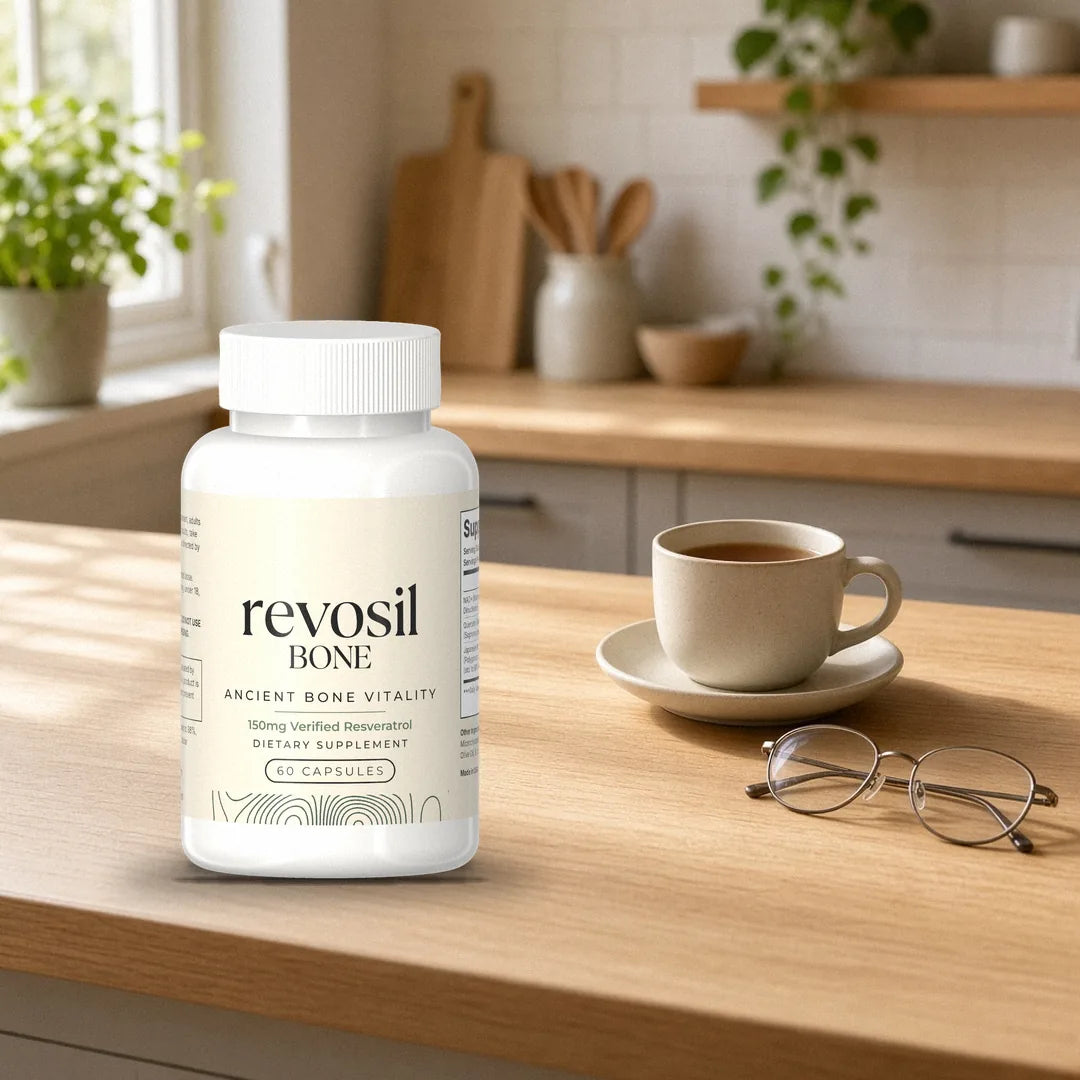
Before I opened the box, I did the one thing I tell patients to do and almost none of them do. I checked the independent lab result to make sure the 150mg on the label was what was in the capsule.
It was.
I ordered that night.
"Mom, You're Allowed To Try Something"
I nearly didn't press the button.
It sounds ridiculous, a physician hesitating over a supplement order. But I'd spent 24 years rolling my eyes at women who brought me bottles. Some part of me felt like I was crossing over to the other side.
My daughter was home that weekend. She found me at the counter after midnight, laptop open, the scan beside it.
She picked up the printout. She knew exactly what it meant. She'd been eight when she lost her grandmother.
"You've done everything you tell everyone else to do," she said. "It hasn't worked. You're allowed to try something."
Then, quieter: "I'd rather you tried this than ended up like Grandma."
I ordered three bottles.
Two things about the order, because I know exactly what women worry about.
I went straight for the 6-month supply. Bone takes time to rebuild, and a rescan won't show change in a few weeks, so I wanted enough to get me all the way to my next DEXA. Buy 3 Get 3 Free worked out far cheaper per bottle, and it shipped free. What I saw at checkout is what I paid.
I didn't stop anything else. I kept my calcium, my vitamin D, my weights, my protein. Revosil isn't a replacement for a good routine. It covers the half of the job my routine was never touching.
I took my first two capsules on a Monday morning with breakfast.
Then I did the hardest thing a worried person can do.
I waited.
Weeks 1 To 3: Nothing. And I Almost Quit.
I'll tell you the truth, because the truth is the only reason you should trust anything else I say.
The first three weeks, I felt nothing.
No glow. No miracle. One capsule at breakfast, one at dinner, and the same tired, achy mornings.
Around day 18 I caught myself thinking, here we go again. Another bottle for the cupboard of things that didn't work.
But I knew something most people don't. Bone renews slowly. A full renovation cycle in one small patch of bone takes months, not days. You can't judge a bone treatment in three weeks any more than you can judge a garden the morning after you plant it.
So I made myself a deal: six months, then a scan. No cheating, no quitting.
Week 5: The Stairs
The first thing I noticed wasn't my bones.
It was the stairs at the hospital.
I always take the stairs to the third floor. For the past year, I'd arrive at the top with a dull ache low in my back that I'd silently diagnosed as "being 55."
One Tuesday I got to the top and realized I'd been thinking about a patient the whole way up.
Not my back.
Month 2: My Trainer Added Weight
My trainer noticed before I did.
"You're not bracing like you used to," she said, and put another plate on the bar.
For months I'd been lifting like a woman who was afraid of her own spine. Shoulders up, jaw clenched, every rep a negotiation.
That fear wasn't gone. But it had a crack in it.
Month 3: The Morning I Forgot To Be Careful
My granddaughter was visiting. She's four, and she greets people at full speed.
She came flying down the hallway, arms out, and I did what grandmothers have done since the beginning of time. I scooped her up and swung her round.
Halfway through the swing, I realized I hadn't thought about it first.
For two years, every time a small child ran at me, a little alarm went off: careful, careful, your hip, your back. Remember, my mother broke hers stepping off a porch.
That morning the alarm didn't go off.
I put her down, went into the bathroom, and cried for about a minute. Then I washed my face and made her pancakes.
Month 5: The Night Before The Scan
I barely slept.
Here's the thing about being a doctor who's also the patient: I knew every way this could go wrong. I knew how small an improvement could be and still count. I knew that "no change" would be a win compared with where I'd been heading.
And I knew that if it came back worse, I'd be back in the chair with the prescription pad.
At 3 a.m. I was in the kitchen again. Same counter. Same tea. Same printout from six months earlier, the one with –2.4 on it.
I wrote down the number I was hoping for. Then I crossed it out, because it felt like tempting fate.
The Six-Month Scan
The technician was a woman I'd trained alongside. She didn't say anything while she ran it.
She didn't need to. I watched her face change at the screen.
"Linda," she said, "come and look at this."
My last scan: –2.4.
My new scan: +0.7. Normal range.
The same range I'd spent years chasing with weights and calcium and discipline.
I sat in my car in the hospital parking lot for a long time.
I wasn't crying, not at first. I was thinking about the porch. The laundry basket. Two steps.
I was thinking that my mother never got this scan.
Then I was crying.
The Twelve Women I Didn't Tell Until I Was Sure
Twenty-four years of practice. And a patient with a bottle in her handbag had taught me the most useful thing I'd learned in a decade.
I didn't change my clinical practice overnight. I'm a doctor; we're slow and suspicious for good reasons.
But since then, I've quietly mentioned Revosil to eleven of my postmenopausal patients. The ones who'd done everything right and were still stuck.
The ones who've actually taken it have come back with better numbers.
One of them, 57, had been on Fosamax for three years and stuck around –2.2 for two of them. At her follow-up she came back at –1.6.
She held the printout with both hands and said: "Doctor, I feel like I got some years back."
I think about my mother every time someone says that to me.
So Why Didn't Anyone Tell You This?
You're entitled to be angry about this part. I was.
There are three honest reasons this information doesn't reach you in a 10-minute appointment.
1. Nobody owns resveratrol.
It's a plant compound. It can't be patented. Nobody spends a fortune on reps, conferences and journal adverts to teach doctors about something they can't own. The drugs we prescribe come with an entire education machine. This doesn't.
2. Most of us were trained to ignore supplements.
For good reason, usually. Most supplements are under-dosed, untested marketing. I'd seen so much junk that I'd stopped looking. The problem is that when you stop looking, you also miss the one that matches a real trial.
3. The appointment is ten minutes long.
Your doctor has your scan, your blood pressure, your cholesterol and three other things to cover. "Keep up the calcium, rescan in two years" fits in ten minutes. This page doesn't.
None of that makes your doctor a bad doctor. I am that doctor. I said that line for 24 years.
But it does mean something uncomfortable:
Nobody's coming to tell you. The next rescan is coming whether you act or not, and your bones don't pause while you wait for the system to catch up.
What "Two Years" Really Means
Let me put the two-year wait in plain numbers.
After menopause, women can lose bone quickly in the first years, as much as 2% a year or more.
"Come back in two years" isn't neutral. It's two more years of the clear-out team outrunning the rebuilders. It's two more years of the gap widening while you do everything you were told.
My mother didn't have two years. She had two steps.
I'm not telling you this to frighten you. I'm telling you because waiting is a decision too, and nobody ever explains what it costs.
What I'd Tell You If You Were Sitting Across From Me
If you were my patient, this is what I'd say, in this order.
Keep your routine. Calcium, vitamin D, K2 if you take it, walking, weights, protein. Don't throw away good habits. They supply the materials.
Add the missing half. Slow the clear-out and support the rebuild, at a dose that's actually been studied in postmenopausal women.
Check the dose on whatever you buy. 150mg of resveratrol a day. If it says 25 or 50, you're repeating my mistake.
Give it time. Bone renews slowly. Take it daily for at least three to six months before your next scan.
Talk to your own doctor. Especially if you're on medication. Revosil works alongside calcium, vitamin D3 and K2. If you already take another resveratrol or NAD+ product, check with your doctor so you don't double up.
An Honest Timeline, So You Don't Quit Too Early
I nearly quit at day 18. Please don't.
- Weeks 1 to 3: most likely, you'll feel nothing. That's normal. Bone is slow.
- Month 1 to 2: some women notice more energy or less ache on long walks. Some don't.
- Months 3 to 6: My numbers finally moved. This is the window to give it before you judge it on paper.
- Your next DEXA: this is the real test. Bring the old printout. Compare.
I won't promise you my number. Nobody honest can promise you a number. What I can tell you is that the dose in this bottle is the dose that was studied, and that I'd lost years before I knew the difference.
How To Get Revosil Bone
Revosil is a small company. They sell directly through their own website, so you know you're getting the verified, cold-extracted formula and not something sitting in a hot warehouse.
Each bottle holds 60 capsules: two a day, a 30-day supply.
Right now they're running Buy 3 Get 3 Free on the 6-month supply:
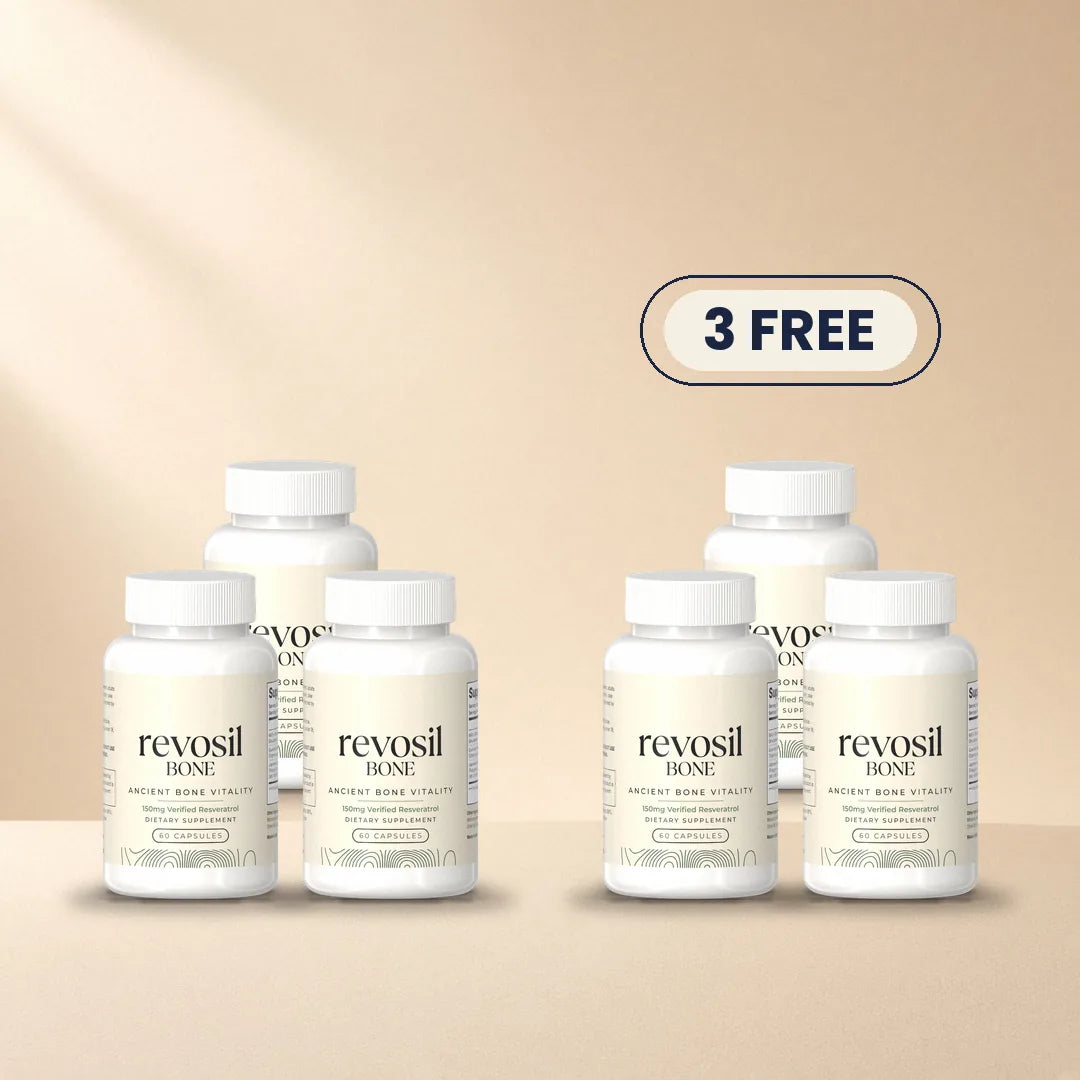
I'll tell you what I'd do: the 180-day supply. Not because bigger is better, but because six months is the window that makes sense before a rescan, and it's the bundle the guarantee fits best.
Why I'd Order Today, Not Next Month
I can't tell you whether it'll still be in stock tomorrow.
If you've read this far, you already know whether this is for you.
The 180-Day Guarantee
Here's something no prescription pad has ever offered you.
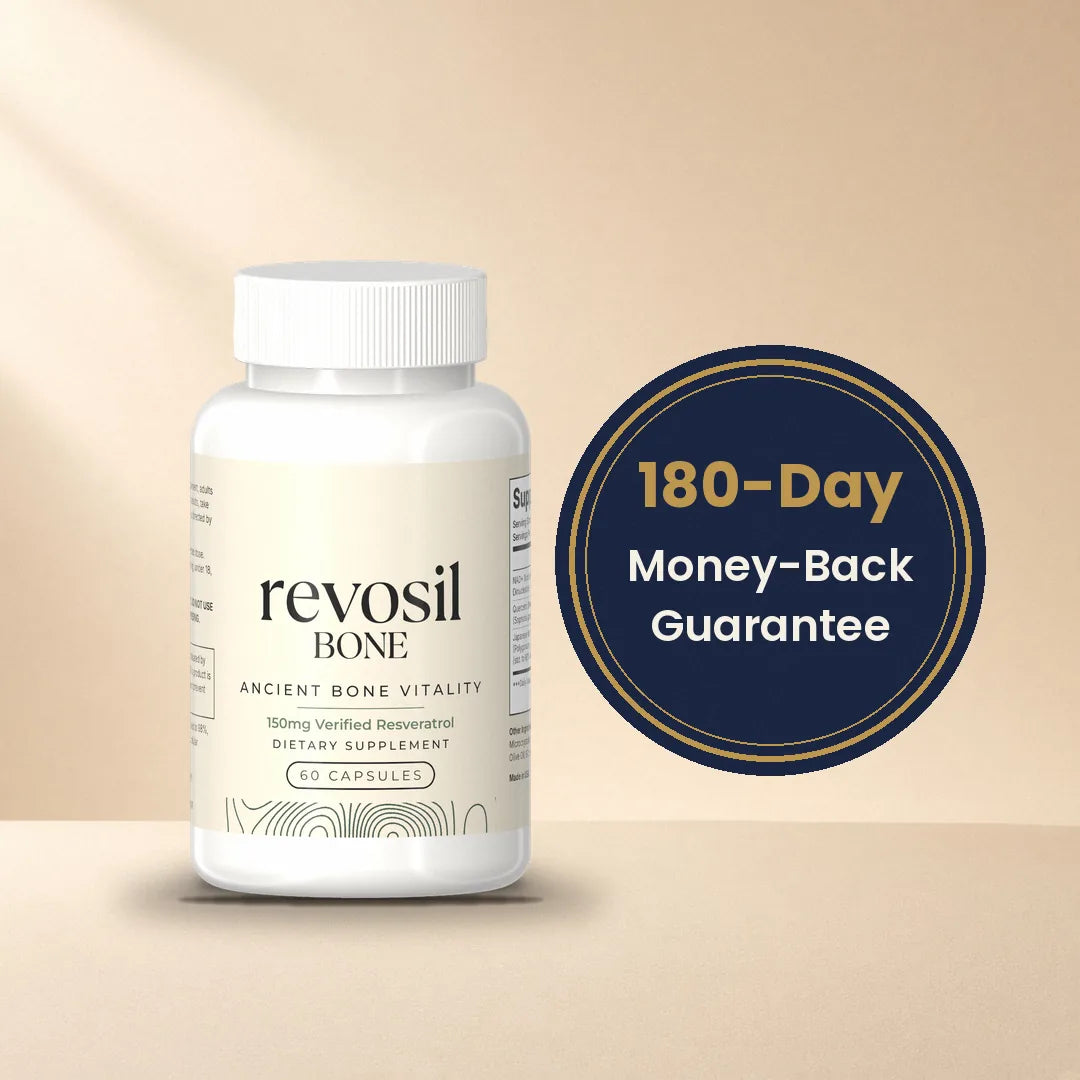
Revosil Bone comes with a 180-day money-back guarantee.
Take it for up to six months. If you're not completely happy, for any reason, return it for a full refund. Even if the bottles are empty. No questions asked.
That's long enough to take it properly, get your next scan, and judge it on your own numbers.
Compare that with how I'd spent the previous eight months: more than $150 on bottles that, I now know, were never going to work. Nobody offered me my money back for those.
The only thing you can't get refunded is the time.
Two Questions Before You Decide
First: your next DEXA is already on a calendar somewhere, six months away, twelve, maybe two years. When the technician turns the screen towards you, which direction do you want that number to have moved?
Second: what will you have done between now and then?
Because "keep taking calcium and wait" is what I did. It's what my mother did. And I know where it leads.
P.S. In case you skipped to the end, which I'd do too: my T-score was –2.4. Eight months of weights, protein and 1,200mg of calcium moved it 0.2 points. The resveratrol I'd tried was 25mg; the trial that improved spine and hip density in postmenopausal women used 150mg a day. Revosil Bone has the full 150mg, cold-extracted and lab-verified, with quercetin and NAD+. Six months later my number was back in the normal range. You have 180 days to see what it does for you.
P.P.S. My mother was 59. Two steps off a porch with a laundry basket.
I'm 55. Last Sunday I carried my grandson up those same kind of steps on my hip, and I didn't think about it until I was writing this.
Your rebuilders haven't quit. They've been outnumbered. Give them the half of the job nobody told you about.
Dr. Linda Cooper
What Women Are Saying
"Back on the pickleball court at 64."
I'd quit Thursday pickleball because I was terrified of a fall after my scan results. Six months on Revosil Bone and I'm back playing, and my last DEXA was the first one in five years that didn't go down.
 Margaret Davis
Verified Buyer
"I can lift my grandkids again."
My back ached so much in the mornings I was scared to pick up my grandkids. Now I'm back to knitting for them and lifting them up for cuddles, and the worry has all but gone. Wish I'd found these years ago.
 Linda Harris
Verified Buyer
"First bone supplement I actually felt."
Thirty years of gardening and I'd tried every cheap calcium and resveratrol pill out there. These are the first ones I've actually felt working, and my rescan finally went the right way.
 Susan Parker
Verified Buyer
"My T-score was –2.2 and my doctor just said calcium. Eight months on Revosil and my rescan came back at –1.8."
 Shirley W.
Verified Buyer
"Tried two cheap resveratrol brands at 50mg and nothing changed. The full 150mg dose is the real deal."
 Beverly R.
Verified Buyer
Questions Women Ask Me
Can I take it with my medication?
Revosil works alongside calcium, vitamin D3 and K2. If you take prescription medication, or another resveratrol or NAD+ product, check with your own doctor or pharmacist first.
Is it a hormone, or HRT?
No. There are no hormones in it. It's resveratrol from Japanese knotweed, quercetin from the Sophora japonica flower bud, and NAD+.
Should I keep taking my calcium and vitamin D?
Yes. I did. They're the building materials. Revosil covers the half of the job they don't.
How do I take it?
Two capsules a day with water: one at breakfast, one at dinner. One bottle is 60 capsules, a 30-day supply.
How long before I know?
Bone renews slowly. Give it at least three to six months of daily use before your next scan.
Is it a subscription?
No. Most women order the 6-month supply in one go (Buy 3 Get 3 Free), since bone takes months to show change on a scan. Subscribe & Save is optional, and you can cancel anytime.
What's actually in it?
Per two-capsule serving: NAD+ 500mg, quercetin dihydrate 250mg, trans-resveratrol 98% (Japanese knotweed) 150mg. Vegetable capsule. No proprietary blend. Made in the USA.
What if it doesn't work for me?
You're covered by the 180-day money-back guarantee. Return the bottles, even empty, for a full refund.
Sources referenced: RESHAW, a 24-month randomized, double-blind, placebo-controlled crossover trial of resveratrol 75mg twice daily in postmenopausal women. A double-blind, placebo-controlled 90-day trial of quercetin 500mg in 33 postmenopausal women. An observational study of niacin intake in 1,883 US postmenopausal women. All human studies.
These statements have not been evaluated by the Food and Drug Administration. This product is not intended to diagnose, treat, cure, or prevent any disease. Individual results vary.